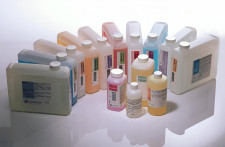
Beckman Coulter A10826 Access DHEA-S Reagent, 100 Determinations


$166.10
Disclaimer: JIT4You is an independent reseller and is not affiliated with, endorsed by, or an authorized distributor of Beckman Coulter. We do not represent Beckman Coulter in any capacity. All products offered are original Beckman Coulter reagents and are guaranteed for quality.
Compatibile Analyzers: Access, Dxl Series
Test Name: Dehydroepiandrosterone Sulfate (DHEAS)
Article Number: A10826
Number of Tests: 100
- Description
- Additional information
Description
Beckman Coulter A10826 Access DHEA-S Reagent Specifications:
- Brand: Access
- Manufacturer: Beckman Coulter A10826
- Country of Origin: United States
- Application: Reagent
- For Use With: For use with Access Immunoassay Systems
- Number of Tests: 100 Tests
- Storage Requirements: Requires Refrigeration
- Test Name: Dehydroepiandrosterone Sulfate (DHEAS)
- Test Type: Reproductive Endocrinology Assay
Beckman Coulter A10826 Access DHEA-S Reagent: INTENDED USE
The Access DHEA-S Reagent assay is a paramagnetic particle, chemiluminescent immunoassay for the quantitative determination of Dehydroepiandrosterone sulfate levels in human serum and plasma using the Access Immunoassay Systems.
Beckman Coulter A10826 Access DHEA-S Reagent: SUMMARY AND EXPLANATION
Dehydroepiandrosterone sulfate (DHEA-S) is a steroid synthesized primarily by the adrenal gland. In those tissues containing sulfatase activity, DHEA-S can be converted to free steroid DHEA. Susbsequently, DHEA and/or DHEA-S may be partially metabolized into active androgens and estrogens.
Serum and plasma DHEA-S levels are found to be the highest of all steroids. DHEA-S levels decrease with age in both men and women after maximum levels are reached around the third decade of life. The half-life for DHEA-S is approximately 8 to 10 hours as compared to the 30 to 60 minute half-lives of other androgens. The long half-life of serum DHEA-S coupled with the limited diurnal variation make DHEA-S a convenient marker for the assessment of adrenal production.DHEA-S may be used in the differential diagnosis of Cushing’s syndrome.
DHEA-S may also be used to evaluate adrenocortical diseases, such as congenital adrenal hyperplasia and adrenal tumors. In hirsute female patients, increased DHEA-S levels have been associated with virilizing adrenal tumors. Patients with polycystic ovary syndrome have often demonstrated elevated levels of DHEA-S, suggesting an adrenal androgen contribution to the defect in this disorder.
Additional Information
| Weight | 4 lbs |
|---|---|
| Dimensions | 12 × 12 × 12 in |
You may also like…
 Chemistry ReagentsShips in 5 days
Beckman Coulter OSR6230 Olympus LIP Lipase Reagent Incl Calibrator
Brand: Beckman Coulter
Compatibile Analyzers: AU Series, Dxc Series
Test Name: Lipase
Article Number: OSR6230
Number of Tests: 4x195
$1,052.48 Chemistry ReagentsShips in 5 days
Beckman Coulter OSR61118 Olympus Triglyceride Reagent (4×735 tests)
Brand: Beckman Coulter
Compatibile Analyzers: AU Series, Dxc Series
Article Number: OSR61118
Package Size: 4×12.5mL (R2), 4×50mL (R1)
Test Name: Triglycerides
Number of Tests: 4x735
Panel: Cardiovascular & Lipid Panels
$515.79- Immunoassay ReagentIn Stock
Beckman Coulter 34435 Access Rubella IgG Calibrator (S0-S5)
Brand: Beckman Coulter
Compatibile Analyzers: Access, Dxl Series
Article Number: 34435
Package Size: 6 x 1.0 mL
Test Name: Rubella IgG
Number of Tests: N/A
$267.24 - Immunoassay ReagentIn Stock
Beckman Coulter A10827 Access DHEAS Calibrator (S0-S5)
Brand: Beckman Coulter
Compatibile Analyzers: Access, Dxl Series
Test Name: Dehydroepiandrosterone Sulfate (DHEAS)
Article Number: A10827
Number of Tests: N/A
$100.49 - Chemistry ReagentsShips in 5 days
Beckman Coulter OSR6179 Olympus CK Reagent Creative Phosphokinase
Brand: Beckman Coulter
Compatibile Analyzers: AU Series, Dxc Series
Test Name: Creatinine
Article Number: OSR6179
Number of Tests: 4x230
Panel: Inflammation & Miscellaneous Panels
$340.80 - Immunoassay ReagentShips in 5 days
Beckman Coulter 33880 Access Free T4 Reagent, 100 Determinations
Brand: Beckman Coulter
Compatibile Analyzers: Access, Dxl Series
Article Number: 33880
Package Size: 2x50mL
Test Name: Free Thyroxine (FT4)
Number of Tests: 100
Panel: Thyroid Panel
$108.35 - Chemistry ReagentsShips in 5 days
Beckman Coulter OSR6116 Olympus Cholesterol Reagent
Brand: Beckman Coulter
Compatibile Analyzers: AU Series, Dxc Series
Article Number: OSR6116
Package Size: 4x22.5mL
Test Name: Cholesterol
Number of Tests: 4x910
Panel: Cardiovascular & Lipid Panels
$354.85 - Chemistry ReagentsShips in 5 days
Beckman Coulter OSR6104 General Chemistry Alkaline Phosphatase
Brand: Beckman Coulter
Compatibile Analyzers: AU Series, Dxc Series
Test Name: Alkaline Phosphatase (ALP)
Article Number: OSR6104
Number of Tests: 4x820
Package Size: 4x30mL
$223.00 - Immunoassay ReagentShips in 5 days
Beckman Coulter 33560 Access Testosterone Reagent
Brand: Beckman Coulter
Compatibile Analyzers: Access, Dxl Series
Test Name: Testosterone
Article Number: 33560
Number of Tests: 100
Package Size: 2x50mL
Panel: Female Hormone Panel, Male Hormone Panel, Reproductive Hormone Panel
$149.60 - Chemistry ReagentsIn Stock
Beckman Coulter OSR6175 Olympus Prealbumin Reagent R2
Brand: Beckman Coulter
Compatibile Analyzers: AU Series, Dxc Series
Test Name: Prealbumin
Article Number: OSR6175
Number of Tests: 120
$160.47